


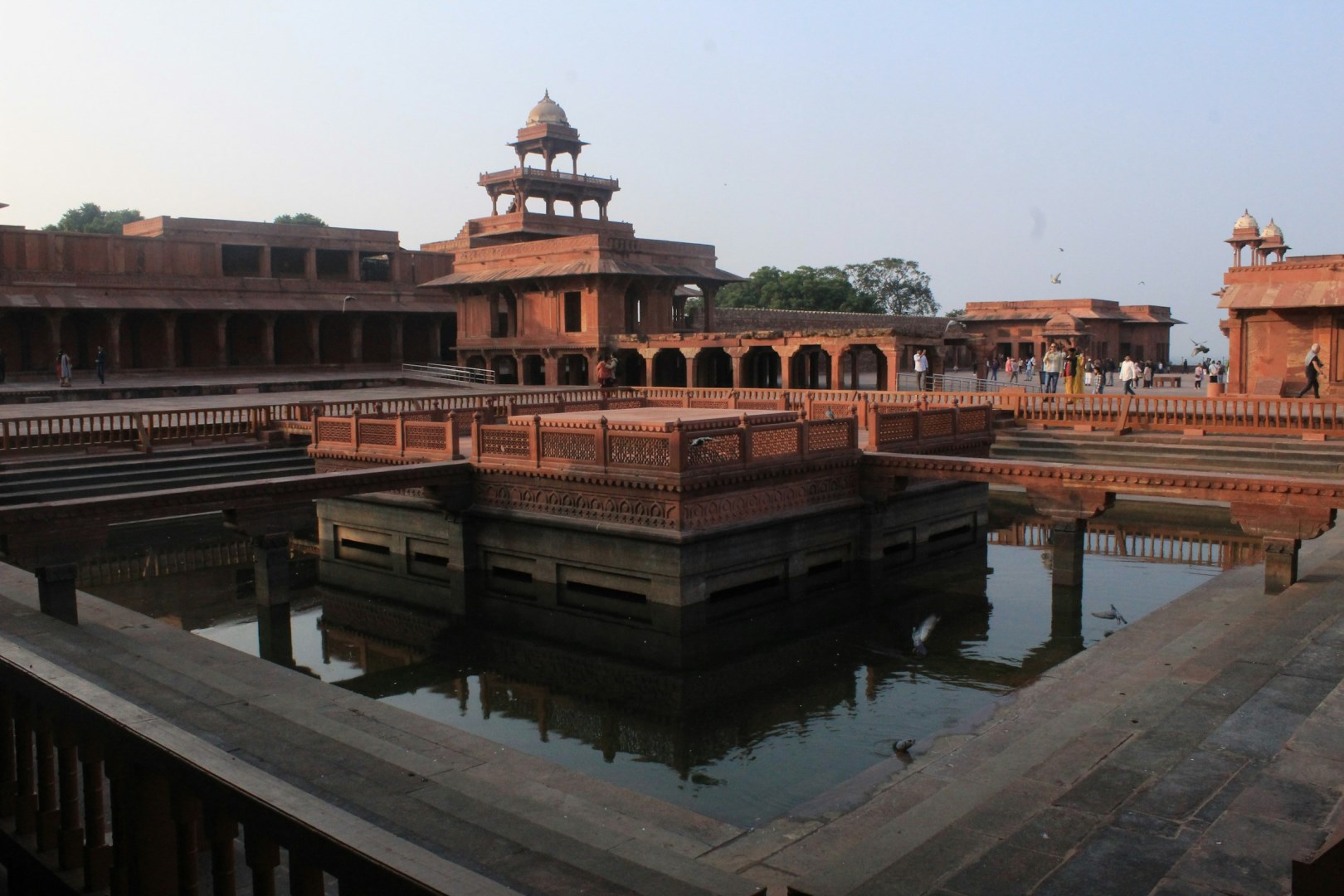
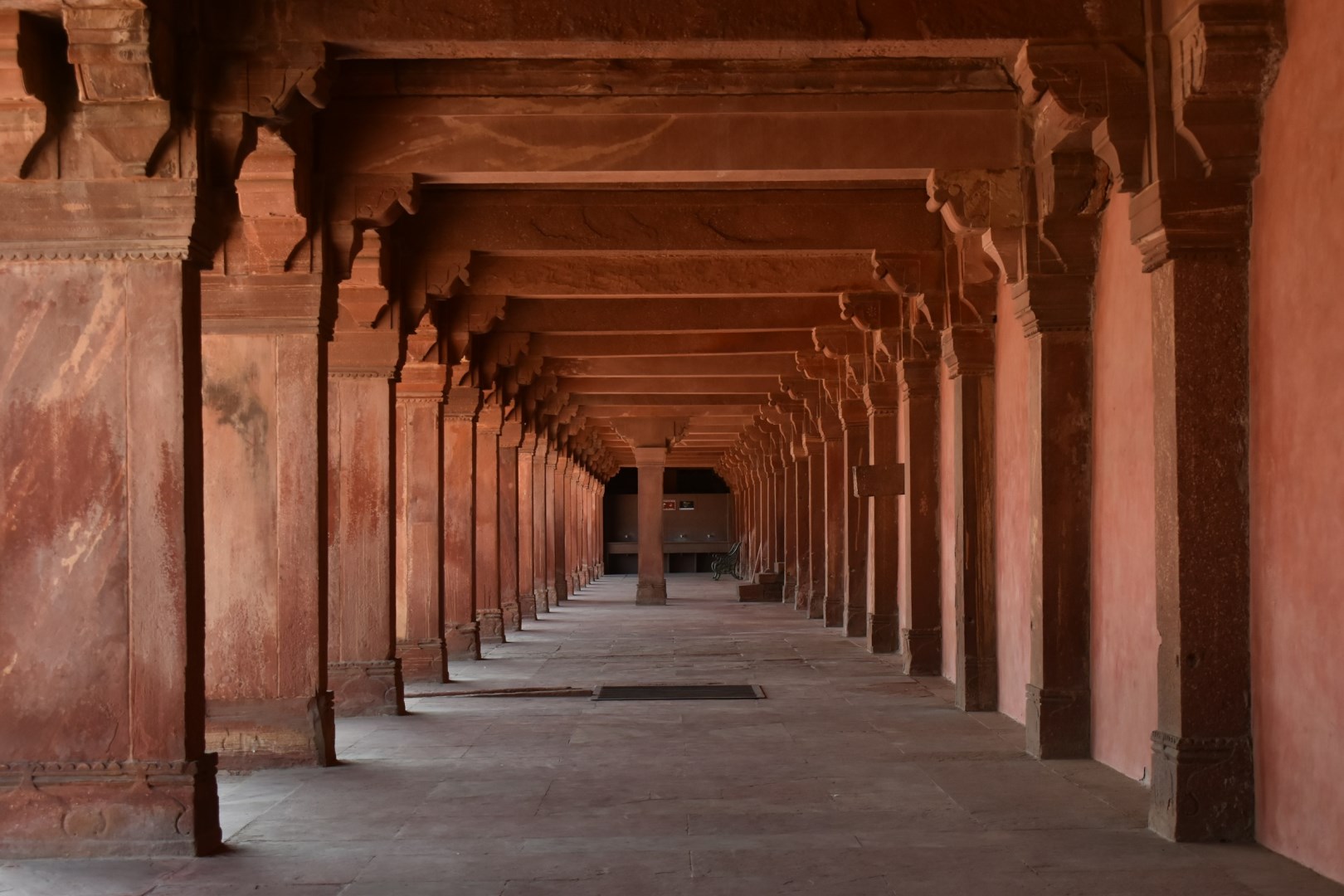
Fatehpur Sikri is a historic city in Uttar Pradesh, located near Agra and known for its grand red sandstone architecture and carefully planned urban layout. Built around a ridge, the former imperial city contains palaces, courtyards, audience halls, religious buildings, and gateways arranged within a fortified complex. Its architecture combines Islamic, Hindu, Jain, and regional design elements, reflecting the cultural setting of the Mughal court. The city is one of India’s most important surviving examples of Mughal urban planning and is recognized as a UNESCO World Heritage Site.
Fatehpur Sikri was closely associated with Emperor Akbar and the Sufi saint Sheikh Salim Chishti, whose presence influenced the development of the imperial city. The Jama Masjid remains an important religious structure, while the white marble tomb of Sheikh Salim Chishti stands within its courtyard. The complex also contains the Diwan-i-Khas, Diwan-i-Am, Panch Mahal, Jodha Bai’s Palace, and other buildings connected with court life. Their carved stone screens, brackets, pillars, and decorative details show how Mughal architecture incorporated techniques and forms from different Indian traditions.
The Buland Darwaza is one of Fatehpur Sikri’s most recognizable landmarks, rising prominently above the surrounding complex as a monumental entrance to the Jama Masjid. Inside the royal enclosure, the Panch Mahal consists of five progressively smaller levels supported by columns, while the Diwan-i-Khas contains the distinctive central pillar and radiating stone brackets. The city’s elevated position provides views across the surrounding countryside, while the broad courtyards and interconnected buildings reveal the scale of the former imperial settlement. The complex is maintained as a protected heritage site by the Archaeological Survey of India.
Food in the area reflects the cuisine of Uttar Pradesh and the wider Mughal-influenced traditions of northern India, with dishes such as kebabs, biryani, breads, lentils, and rich meat and vegetable preparations commonly found in nearby Agra and surrounding towns. Sweets such as petha are also closely associated with the Agra region. A distinctive feature of Fatehpur Sikri is the combination of imperial architecture and local building traditions: red sandstone was extensively used for structural and decorative elements, while carved screens, brackets, columns, and balconies display craftsmanship rooted in the Indian subcontinent. The result is a city where several architectural influences are visible within a single planned complex.

